
In today’s digital world, screens are woven into nearly every part of daily life. Phones, tablets, laptops, and televisions keep us connected, productive, and entertained—but they also have a powerful influence on how well we sleep. Growing research shows that blue light and sleep are closely connected, and excessive exposure can quietly disrupt the body’s natural rhythms.
At 8 Hour Sleep Clinic, many patients are surprised to learn that their sleep struggles are not caused by stress alone, but by light exposure habits that interfere with the brain’s ability to wind down at night.
What Is Blue Light?
Blue light is a short-wavelength, high-energy light emitted naturally by the sun. During the day, it plays a beneficial role by boosting alertness, attention, and mood. However, artificial sources—such as LED lighting and digital screens—extend blue light exposure far into the evening hours.
Unlike warmer light tones, blue light sends a strong “daytime” signal to the brain, which can confuse the body when it is time to rest.
Why Evening Screen Use Matters
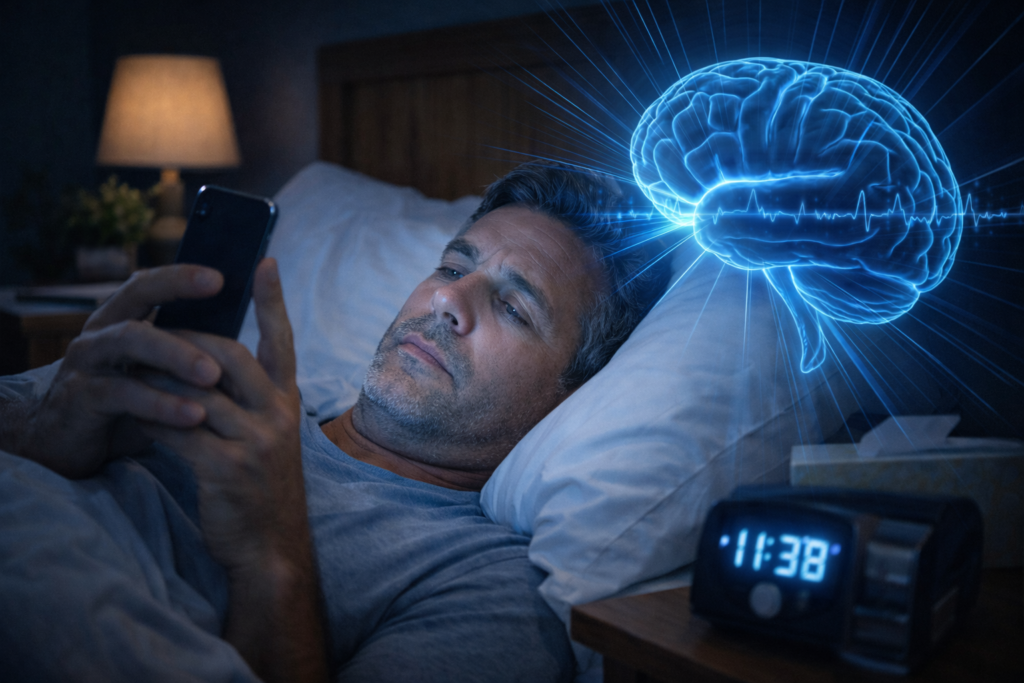
Modern routines often involve screen time before bed, whether it’s scrolling through social media, watching shows, or answering late-night emails. While these activities may feel relaxing, they expose the eyes and brain to stimulating light at a time when the body expects darkness.
Even relatively short exposure can delay the onset of sleep, reduce sleep depth, and make falling asleep more difficult—especially when screen use becomes a nightly habit.
The Role of Melatonin in Sleep
Melatonin is a hormone produced by the brain that helps regulate the sleep-wake cycle. As darkness increases in the evening, melatonin levels rise, signaling that it’s time to prepare for sleep.
Blue light interferes with this process by causing melatonin suppression, effectively delaying the body’s internal “sleep signal.” When melatonin release is delayed, people may feel alert long past their intended bedtime, even if they feel physically tired.
How Blue Light Disrupts the Internal Clock
The human body operates on an internal clock that aligns with the natural light-dark cycle. This clock influences sleep, hormone release, digestion, and body temperature.
Excessive evening light exposure contributes to circadian rhythm disruption, making it harder for the body to recognize when it should transition into rest mode. Over time, this misalignment can lead to inconsistent sleep patterns and reduced sleep quality.
Digital Devices and Sleep Quality
The problem is not only the light itself, but also how digital engagement affects the brain. Digital devices and sleep interact in complex ways, combining light exposure with mental stimulation.
Late-night device use often involves:
- Emotional engagement (news, social media, messaging)
- Cognitive stimulation (work emails, problem-solving)
- Reduced awareness of time passing
Together, these factors increase arousal, making it more difficult for the nervous system to shift into a relaxed state suitable for sleep.
Effects on the Sleep Cycle
Healthy sleep consists of multiple stages that cycle throughout the night. These stages support physical restoration, memory consolidation, and emotional regulation.
When blue light exposure delays sleep onset or fragments rest, it interferes with sleep cycle regulation, reducing time spent in deeper, more restorative stages. As a result, individuals may sleep for many hours yet wake feeling unrefreshed or groggy.
Signs Blue Light May Be Affecting Your Sleep
Not everyone responds to blue light exposure in the same way, but common warning signs include:
- Difficulty falling asleep at a consistent time
- Feeling “wired but tired” at night
- Trouble waking up in the morning
- Daytime fatigue despite adequate time in bed
- Increased reliance on caffeine
If these symptoms occur alongside regular evening screen use, light exposure may be playing a larger role than expected.
Practical Ways to Reduce Blue Light Impact
Managing blue light exposure does not require eliminating technology entirely. Small, consistent changes can significantly reduce its effect on sleep.
Helpful strategies include:
- Dimming lights in the evening
- Using warm lighting instead of bright LEDs
- Activating night-mode settings on devices
- Avoiding screens at least 60 minutes before bedtime
- Charging devices outside the bedroom
These adjustments support the body’s natural transition into rest.
Supporting Better Sleep Naturally
Many patients prefer improving sleep naturally rather than relying on medications. Light management is one of the most effective non-pharmacological strategies for enhancing sleep quality.
Other supportive habits include:
- Maintaining consistent bed and wake times
- Creating a calming pre-sleep routine
- Getting morning sunlight exposure
- Keeping the bedroom dark and cool
- Reducing evening stimulation
When combined, these practices reinforce healthy sleep signals and improve long-term rest.
When to Seek Professional Guidance
If sleep difficulties persist despite reducing screen use and improving routines, a deeper evaluation may be needed. Sleep clinics assess whether light exposure is the primary issue or if an underlying sleep disorder is contributing to symptoms.
Professional evaluation can help identify:
- Circadian rhythm disorders
- Insomnia
- Sleep-related anxiety
- Other conditions affecting sleep quality
Personalized care ensures that treatment targets the true cause of sleep disruption.
Conclusion
Blue light exposure has become an unavoidable part of modern life, but its effects on sleep should not be underestimated. By understanding how light influences the body’s internal clock and making intentional changes to evening routines, it is possible to protect sleep quality and restore healthier rest. Thoughtful light management is a powerful step toward more consistent, restorative sleep and better overall well-being.