
Wearable devices and mobile apps have transformed the way people think about sleep. With a quick glance at a wrist or phone, users can see charts, scores, and graphs claiming to reveal how well they slept. But how accurate are these tools really? As more patients arrive at 8 Hours Sleep Clinic with questions about their nighttime data, understanding what a sleep tracker can and cannot measure has become increasingly important.
While consumer sleep tools can offer useful insights, they are not medical devices. Knowing their strengths—and their limitations—helps patients make informed decisions about their sleep health instead of relying on numbers that may not tell the full story.
How Sleep Trackers Work
Most consumer sleep trackers rely on motion sensors, heart rate monitoring, and sometimes skin temperature to estimate sleep patterns. By analyzing movement and physiological signals, these devices attempt to infer when a person is asleep, awake, or transitioning between different phases.
This approach falls under the broader category of sleep technology, which has expanded rapidly in recent years. Advances in sensors and algorithms have improved estimates, but they still rely on indirect measurements rather than direct brain activity.
Because of this, trackers excel at identifying general trends over time but struggle with precision on any single night.
What Sleep Trackers Can Measure Well
When used consistently, sleep trackers can provide helpful high-level information. They are particularly good at identifying:
- Bedtime and wake-up time patterns
- Total time spent in bed
- Periods of movement or restlessness
- General sleep consistency across weeks or months
- Changes in routine that affect rest
For many people, simply becoming more aware of sleep habits can encourage healthier routines and better consistency.
Understanding Sleep Stages in Consumer Devices
One of the most appealing features of many trackers is their attempt to break the night into sleep stages, such as light sleep, deep sleep, and REM sleep. These estimates are based on movement patterns and heart rate variability, not on direct measurement of brain waves.
In clinical settings, sleep stages are determined by EEG signals recorded from the scalp. Consumer devices cannot access this information, so their stage breakdowns should be interpreted cautiously.
While stage data may reflect general patterns, it is not precise enough to diagnose problems or assess sleep architecture accurately on its own.
Where Sleep Trackers Fall Short
Despite their popularity, there are clear limits of sleep apps and wearable devices. These tools may misinterpret quiet wakefulness as sleep or restless sleep as wakefulness. They also struggle to detect subtle disruptions that occur without large movements.
Common limitations include:
- Difficulty identifying brief awakenings
- Inaccurate detection of sleep onset
- Overestimation of total sleep time
- Misclassification of sleep stages
- Inability to detect breathing-related issues
- Limited insight into sleep quality
Because of these limitations, relying solely on tracker data can sometimes lead to confusion or unnecessary anxiety.
Why Sleep Data Can Be Misleading
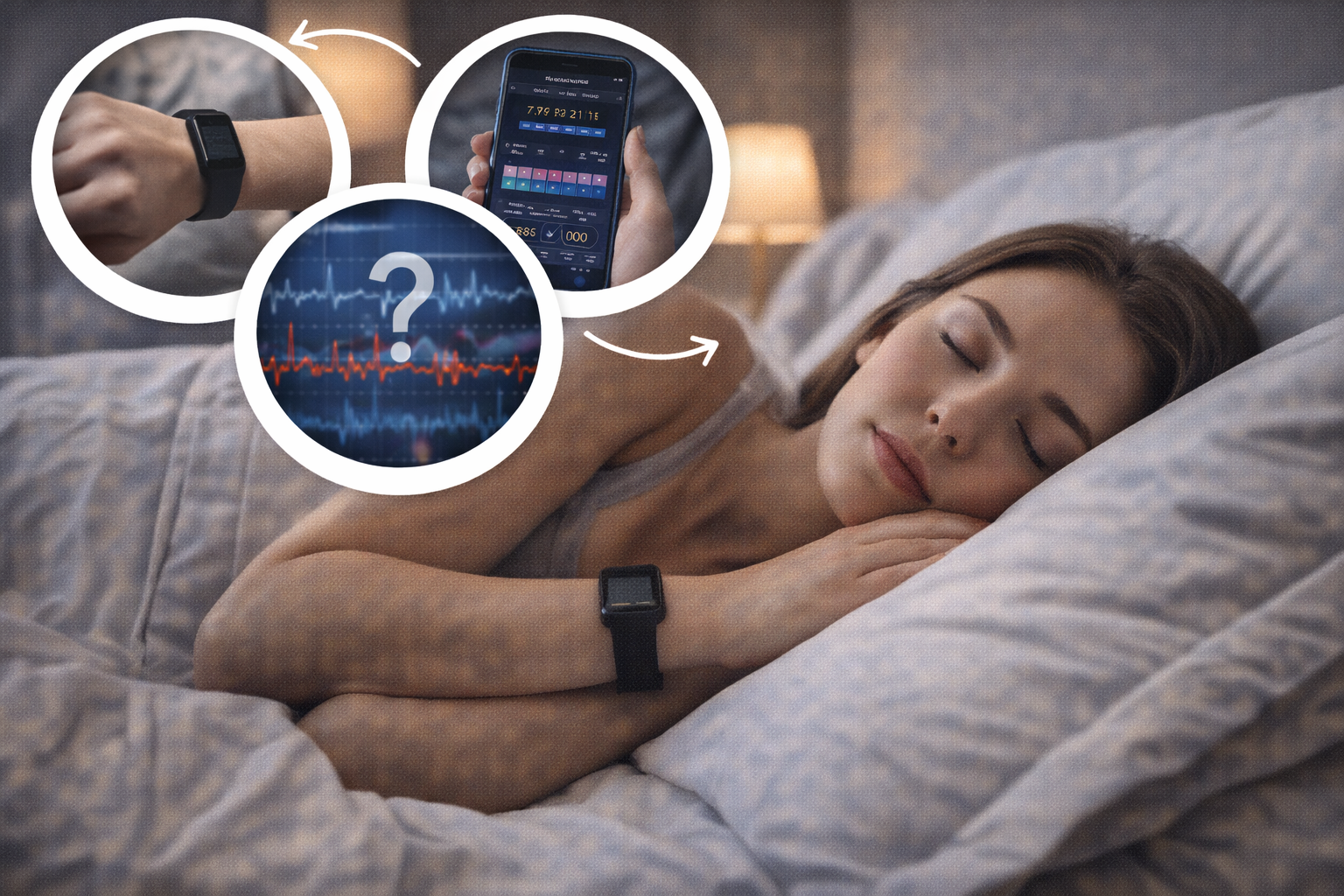
Numbers feel objective, but sleep data without proper context can be misleading. Two people with identical sleep scores may feel completely different the next day. Similarly, someone may feel well-rested despite “poor” tracker results—or exhausted despite “good” scores.
Sleep trackers cannot account for:
- Emotional stress
- Pain or discomfort
- Environmental disturbances
- Medication effects
- Hormonal influences
- Underlying medical conditions
This is why how you feel during the day remains one of the most important indicators of sleep health.
When Sleep Tracking Becomes Counterproductive
For some individuals, constant monitoring creates anxiety around sleep. This phenomenon, sometimes called “orthosomnia,” occurs when people become overly focused on achieving perfect sleep metrics.
Signs that tracking may be harming sleep include:
- Checking scores immediately upon waking
- Worrying about numbers before bed
- Changing routines excessively based on nightly data
- Feeling stressed by normal variations
- Sleeping worse due to performance pressure
In these cases, reducing reliance on tracking or using it only for long-term trends can be beneficial.
How Clinical Testing Differs from Consumer Tracking
When sleep issues persist, consumer tools are no substitute for professional evaluation. Clinical sleep testing uses specialized equipment to measure brain activity, breathing, oxygen levels, muscle movement, and heart rhythm throughout the night.
This comprehensive approach allows clinicians to:
- Accurately identify sleep stages
- Detect breathing disorders such as sleep apnea
- Recognize movement-related sleep conditions
- Measure arousal frequency
- Understand the true cause of fragmented sleep
Unlike consumer trackers, clinical testing provides diagnostic-grade information that guides effective treatment.
How Sleep Clinics Use Tracker Data Appropriately
Although trackers are not diagnostic tools, they can still play a supportive role when used correctly. Sleep specialists may review tracker trends to understand sleep schedules, consistency, or lifestyle patterns.
When combined with clinical evaluation, tracker data can:
- Highlight irregular sleep timing
- Reveal chronic sleep restriction
- Support behavioral sleep interventions
- Track progress over time
- Encourage patient engagement in treatment
The key is using this information as a supplement—not a replacement—for medical assessment.
Making the Most of Sleep Technology
To use sleep trackers effectively:
- Focus on long-term trends rather than nightly scores
- Pair data with how you feel during the day
- Avoid making drastic changes based on a single night
- Use tracking to support consistency, not perfection
- Seek professional guidance when problems persist
Technology works best when it empowers understanding rather than fueling worry.
Conclusion
Sleep trackers have changed the way people engage with their sleep, offering accessible insights and encouraging healthier routines. However, these tools have clear limitations and cannot replace professional evaluation when sleep problems persist. Understanding what trackers can and cannot tell you allows for a balanced, informed approach to sleep health—one that combines awareness, technology, and expert care to support truly restorative rest.